

 Written by
 [ad_1]
An Overview of Dynamic Pricing for Hosts 5 Tools Included
With the right pricing strategy and dynamic pricing solutions, selecting the right price for your vacation rental listing can almost be an exact science that doesn’t require a huge effort. Monitoring consumer trends and analyzing average order value are also key to optimizing revenue with dynamic pricing.
Dynamic pricing is widely used across industries such as transportation, energy, retail, hospitality, and entertainment. Some dynamic pricing examples include airlines adjusting ticket prices based on demand, ride-sharing apps like Uber using surge pricing, hotels changing rates for different dates, e-commerce platforms offering discounts based on browsing behavior, and utilities varying rates depending on usage patterns.
These strategies rely on sophisticated algorithms and artificial intelligence to analyze large volumes of data and make real-time pricing decisions, allowing businesses to respond quickly to market changes and maximize revenue.
Key Takeaways:
- A dynamic pricing strategy is ideal for hosts who want to grow and scale their business, as it lets them optimize revenue opportunities.
- To stay competitive, hosts must avoid charging the same fixed prices for too long.
- Dynamic pricing tools help track demand fluctuations and use this real-time data to set competitive pricing automatically.
When can hosts raise prices safely? And, equally important, by how much?
Unlike several other industries where price increases are typically limited to once a year, hosts are recommended to use a pricing model where rates change often — sometimes even daily. Considering that this is common practice, understanding the pricing logic becomes even more challenging.
Dynamic pricing often results in different prices for different customers based on factors like demand, browsing behavior, or location, which can impact perceptions of fairness and price discrimination.
Luckily, fast-paced technology adoption has allowed dynamic pricing to become a standard technique for Airbnb hosts.
An Overview of How Dynamic Pricing Works
In the short-term rental industry, dynamic pricing works by continuously adjusting nightly rates to reflect real-time market conditions, with the goal of balancing revenue and occupancy.
Instead of relying on fixed prices, a dynamic pricing strategy analyzes a wide range of real-time data (such as booking pace, availability, seasonality, day-of-the-week demand, local events, competitor listings, length of stay, and historical performance) to determine the optimal price for each night.
Demand pricing and time-based pricing are two common approaches, where prices are adjusted in real time based on fluctuating demand levels or specific time periods such as peak seasons or weekends.
Dynamic pricing algorithms also analyze price elasticity and how sensitive customers are to price changes, allowing property managers to optimize revenue without losing bookings.
Real-time data analysis and machine learning are crucial for effective dynamic pricing, enabling the system to adapt quickly to market changes. The data generated from dynamic pricing provides valuable insights into consumer behavior, which can be used to inform and refine future pricing strategies.
Tracking conversion rates is important for evaluating the effectiveness of dynamic pricing adjustments, helping property managers understand the impact of pricing changes on booking performance and overall revenue.
What Is Dynamic Pricing Software?
Dynamic pricing software is a type of pricing tool that adjusts product prices in real time using a range of factors. In the travel and hospitality industries, it typically uses data regarding:
- Traveler demand
- Rental availability
- Competitor pricing
- Local market conditions
Dynamic pricing software can also improve pricing accuracy by ensuring consistent and precise pricing decisions.
This way, hosts can, for example, automatically raise prices when there’s high demand. Then, when demand decreases, they can charge lower prices to remain competitively priced in changing market conditions. Dynamic pricing systems can integrate with inventory management and sales systems to ensure that pricing adjustments align with overall business goals. In short, it allows them to leverage price flexibility that responds to market demand.
Ongoing monitoring and optimization are necessary for dynamic pricing to remain effective.
Benefits of Dynamic Pricing
Dynamic pricing software offers many advantages. By adapting prices in real time to demand fluctuations, dynamic pricing can boost sales and encourage sales during periods of lower demand, helping you optimize occupancy and revenue. From saving you time to increasing your occupancy rate to ensuring you maximize profits, here’s why it’s highly recommended that hosts use dynamic pricing for their short-term rentals.
Some key benefits include:
- Maximizing revenue by automatically adjusting rates based on market trends and local events.
- Saving time with automated pricing updates across all your channels.
- Increasing occupancy rates by staying competitive in your market.
- Helping increase average order value by optimizing pricing for upsells, add-ons, and longer stays.
- Improving customer relationships by offering personalized pricing and engaging experiences that foster loyalty and repeat bookings.
Note: While dynamic pricing can increase sales and margins when implemented correctly, it must be used responsibly to avoid alienating customers.
Drive revenue growth
When hosts implement dynamic pricing, their listings are competitively priced when demand is low and optimized upward when there’s high demand. By adjusting prices like this, they can increase occupancy during the low season when it’s difficult to attract customers (guests). Then, when the current market demand means they can afford to charge more, they can ensure their profit margins remain a realistic maximum.
Involving sales teams in the dynamic pricing process helps ensure successful implementation and clear communication with customers, as sales teams can provide valuable feedback and help explain pricing changes.
Save time through automation
Implementing a dynamic pricing strategy is time-consuming, and data scientists come at a cost. However, dynamic pricing solutions remove the guesswork and need to adjust prices based on market changes and update dynamic pricing rules manually. This way, you free up time that you can focus on other aspects of growing your rental business.
Maximize occupancy and increase the length of stay
The key objective of a dynamic pricing strategy for short-term rental businesses is to secure as many bookings at the best rates possible. Dynamic pricing does both by setting attractive price points. Hosts can, for example, set dynamic pricing rules so that discounts kick in when guests book more than five nights.
Outperform Your Competitors
You already have a distinct advantage if your competitors are not using dynamic pricing. Take your property management to the next level by understanding every aspect of your business through critical data-driven insights to shape your prices and beat out competitors with fixed costs that do nothing for their bookings.
Additionally, consider implementing competitor-based pricing, which involves monitoring and adjusting your prices based on your competitors’ pricing actions to stay competitive in the market.
Risks of Dynamic Pricing
Besides the advantages of having dynamic pricing, you also want to know the risks. Dynamic pricing strategies can lead to customer backlash and perceptions of unfairness if prices decrease or increase frequently without clear justification.
Consumers may view frequent price changes as price gouging or price discrimination, especially with personalized or location-based pricing, raising ethical concerns. Transparency about when and why prices change is essential for businesses to maintain customer trust and avoid alienating customers. Studies have shown that consumers are more likely to trust businesses that are transparent about their dynamic pricing strategies.
The Federal Trade Commission (FTC) has increased scrutiny on dynamic pricing practices, particularly regarding transparency and fairness. Dynamic pricing faces regulatory scrutiny, especially with algorithmic and data-driven pricing strategies, and can be challenging to implement due to the complexity of monitoring real-time supply and demand trends.
To implement dynamic pricing successfully, businesses must balance revenue optimization with customer trust, align strategies with business objectives, customer needs, and brand values, and establish minimum and maximum price limits to ensure profitability while maintaining customer trust.
And while it seems like you are giving up control of your pricing strategies to another person, it’s partially so, as it’s offset by result-driven returns.
Lastly, you can always still set a rule for your minimum ( and maximum) prices benchmark, so you have no risk of dropping your price below that.
Factors That Influence Dynamic Pricing
Seasonality
Seasonality is one of the main reasons hosts use variable pricing. It has a major impact on pricing because travel demand naturally rises and falls throughout the year.
For instance, during summer holidays and school breaks, demand typically increases, allowing hosts to charge higher nightly rates as guests compete for limited availability. On the other hand, during the low season, price-sensitive customers often book at the last minute in the hopes of finding a discount.
Dynamic pricing solutions can effectively identify these seasonal shifts and adjust your pricing to match supply and demand.
Day of the week
Weekends usually command higher prices due to leisure travel, allowing hosts to charge higher prices. However, weekdays often see lower demand, especially in leisure-focused locations, which means that dynamic pricing models will generally suggest lower prices for these days.
Current market demand
Dynamic pricing will ensure your price changes always meet the demand for vacation rental homes in your category. If the demand is high (and supply is low), the tool will boost your price so that you can maximize revenue. Conversely, the tool will drop prices as part of your customizable data-driven pricing if demand is low.
Local events
Special or significant events can occur throughout the year, either on predictable, recurring dates or at random, unexpected times. Your dynamic pricing solution looks out for these events, adjusting prices accordingly to match the anticipated increase in travelers that these events attract.
Number of days left to book
You will be able to pull in bookings when you have a few immediate openings, as the pricing tool will recommend lower rates to attract last-minute guests.
This approach is similar to how airlines adjust fares based on real-time seat availability and the number of days before a flight. Prices often change depending on the day of the week, time of day, and how close it is to departure, maximizing revenue as demand fluctuates. At the same time, it will ensure inquiries for dates further out will be optimally priced to earn you the best returns.
Competitor prices and occupancy
Any successful vacation rental pricing strategy needs to consider what other properties in your area are doing and charging.
When adjusting your rate manually, you probably paid some attention to competitor rates. However, dynamic pricing tools pay attention to what is happening in your competitors’ rentals and constantly adjust prices accordingly.
For example, if competitor occupancy is full and potential guests are searching for a place to stay, the tool can boost your rates to pull in bookings.
Amenities
The different amenities your rental offers will also impact the pricing recommendations made by your tool, improving your smart pricing options for your vacation rental business.
Reviews
Compared to the retail industry, reviews have an even bigger role to play in the vacation rental industry. As such, your dynamic pricing software factors in how many reviews you’ve received and your average rating.
Understanding Customer Behavior
So you want to nail down a winning dynamic pricing strategy? Well, here’s the thing: it all comes down to really getting your guests and how they tick. When we’re talking vacation rentals and the whole travel game, you’ve got to understand how people hunt for places to stay, what makes them click “book now,” and just how much they’ll flinch when prices jump around.
Dynamic pricing software? It’s basically your secret weapon for diving into all that guest behavior stuff. We’re talking tracking what people have booked before, how they browse around, when they actually pull the trigger on bookings, and how they react when you fidget with your rates.
With all this real-time info at your fingertips, you can set up pricing rules that dance along with demand swings, what your competition’s up to, and whatever the market’s throwing at you—keeping your rates spot-on with what’s actually happening out there.
Here’s how it works in the real world: say your data shows guests tend to book last-minute during those quieter times of year. You can use dynamic pricing to drop your rates and pull them in, boosting your occupancy and getting more bookings rolling.
Flip side? When demand’s through the roof, or there’s some big event happening, you can bump those prices up to squeeze out maximum revenue without ticking off your guests. This whole demand-based approach helps you balance things out, optimize what you’re bringing in, and stay ahead of the competition in a market that changes faster than the weather.
But here’s where you’ve got to be careful—some pitfalls can bite you if you’re not paying attention. We’re talking price discrimination issues, or guests getting seriously annoyed if they think you’re playing games with rates or being unfair about it.
Want to keep everyone happy and build some real trust? Be upfront about how your pricing works—explain the whole dynamic pricing thing, give them real-time updates on rates, and throw in some personalized deals or loyalty discounts when it makes sense.
Here’s an overview of five of the most popular pricing tools that hosts and property managers can use to set prices and increase their profit margins. While traditional cost-plus pricing is a straightforward method that calculates price based on product costs plus a markup, it lacks the flexibility and real-time responsiveness of dynamic pricing tools.
For example, supermarkets use dynamic pricing strategies to manage perishable inventory, adjusting prices based on expiration dates and current inventory levels to maximize sales and reduce waste.
Beyond
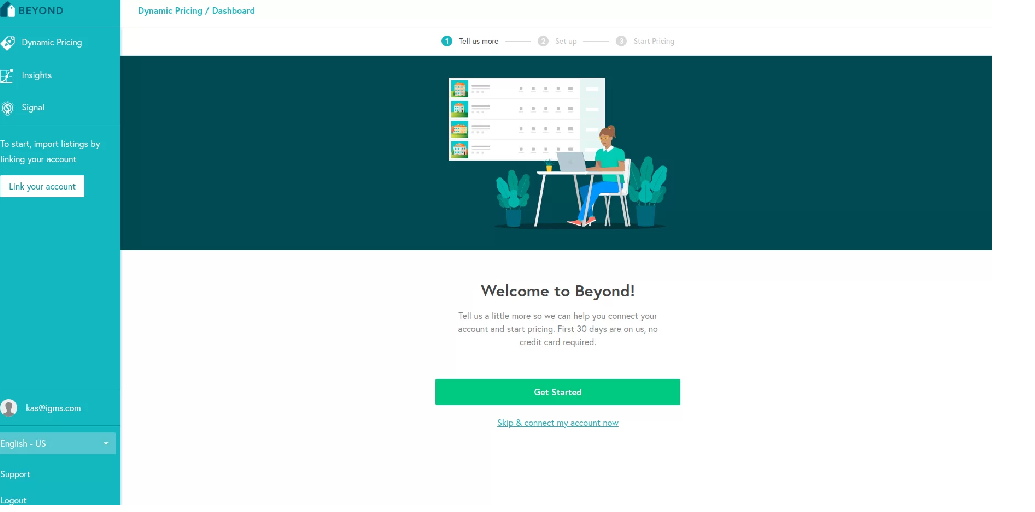
Beyond is a dynamic pricing software that allows you to apply suggested pricing strategies and minimum-stay rules across all the connected channels: Airbnb, Vrbo, and Booking.com.
When it’s integrated with iGMS, it becomes the perfect tool for managing your short-term rentals’ prices and availability based on data-driven insight, automation rules, and customization. The software also assigns a pricing Health Score to your properties to make sure you’re always aware of opportunities for optimization.
PriceLabs
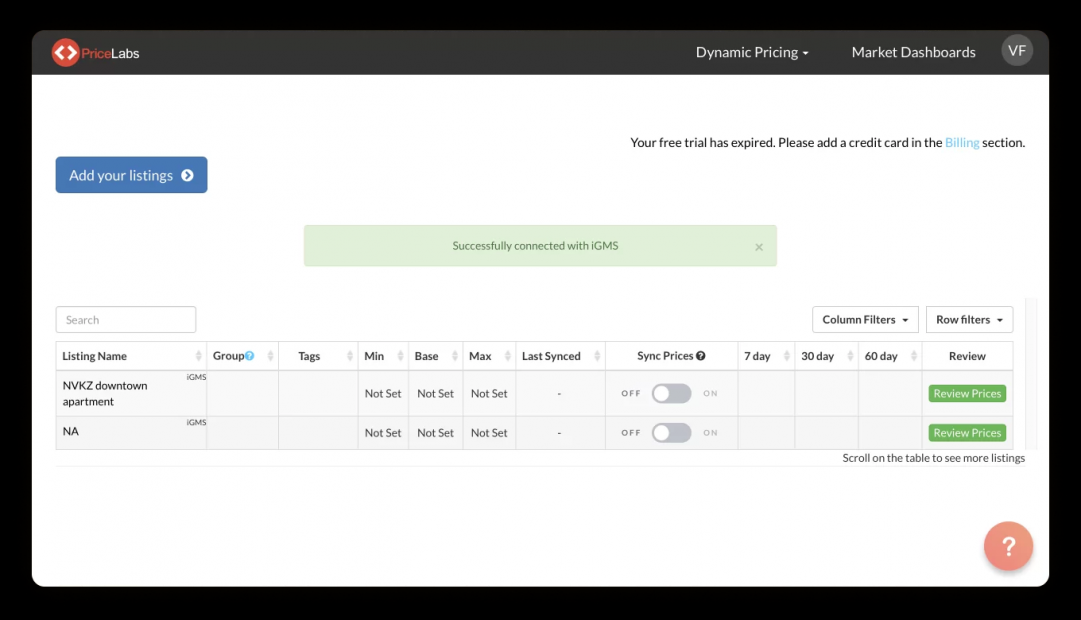
PriceLabs offers customizable data-driven pricing to help boost your vacation rental revenue. Their price recommendations take into account market supply and demand, seasonal and day-of-week trends, special events/holidays, and lead time.
The integration with PriceLabs allows you to apply suggested pricing strategies and min-stay rules across all the connected channels: Airbnb, HomeAway, Vrbo, and Booking.com. Before you go to the PriceLabs platform and enable the connection with iGMS, make sure that the iGMS properties have the correct geographical location. PriceLabs will use this information to manage your properties’ pricing and availability.
They pinpoint dates that are in high demand by looking at data from nearby listings and hotels, track seasonality based on historical data, and analyze your listings’ performance to suggest pricing tweaks. Customization options include setting dynamic minimum stays, enabling occupancy-based adjustments, and more.
Wheelhouse
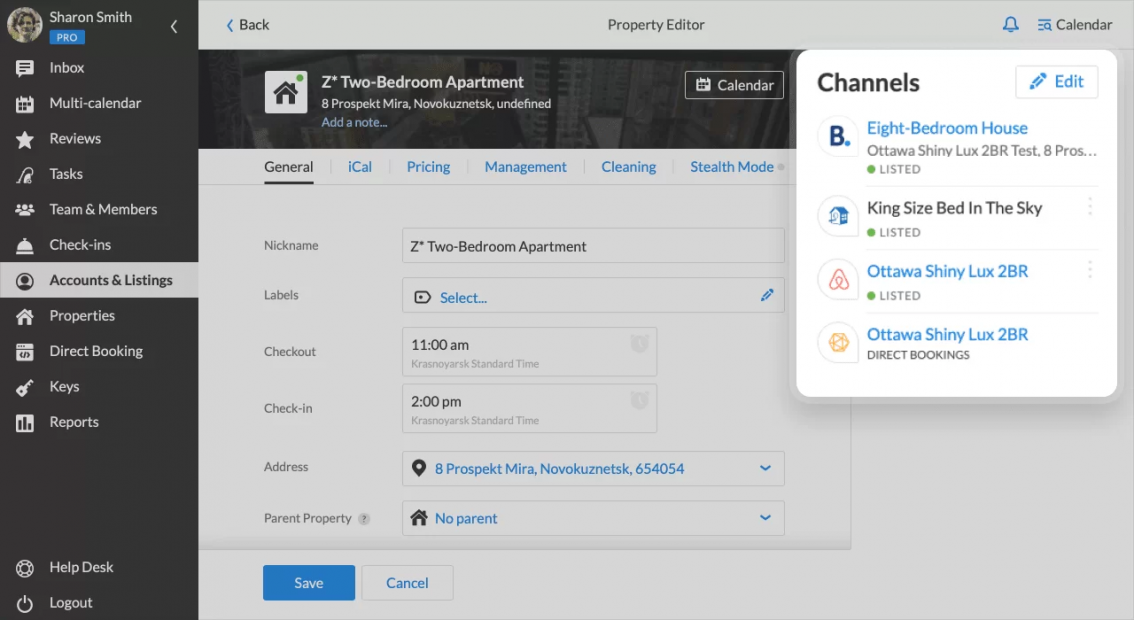
Wheelhouse helps Airbnb hosts, vacation rental owners, and property managers run their businesses more efficiently with tools like dynamic pricing, powerful data insights, and a personalized revenue management strategy. They help you stay competitive throughout the year with more than 240 unique rates per year.
Like the other tools, Wheelhouse integrates with iGMS and several other popular PMS providers.
DPGO
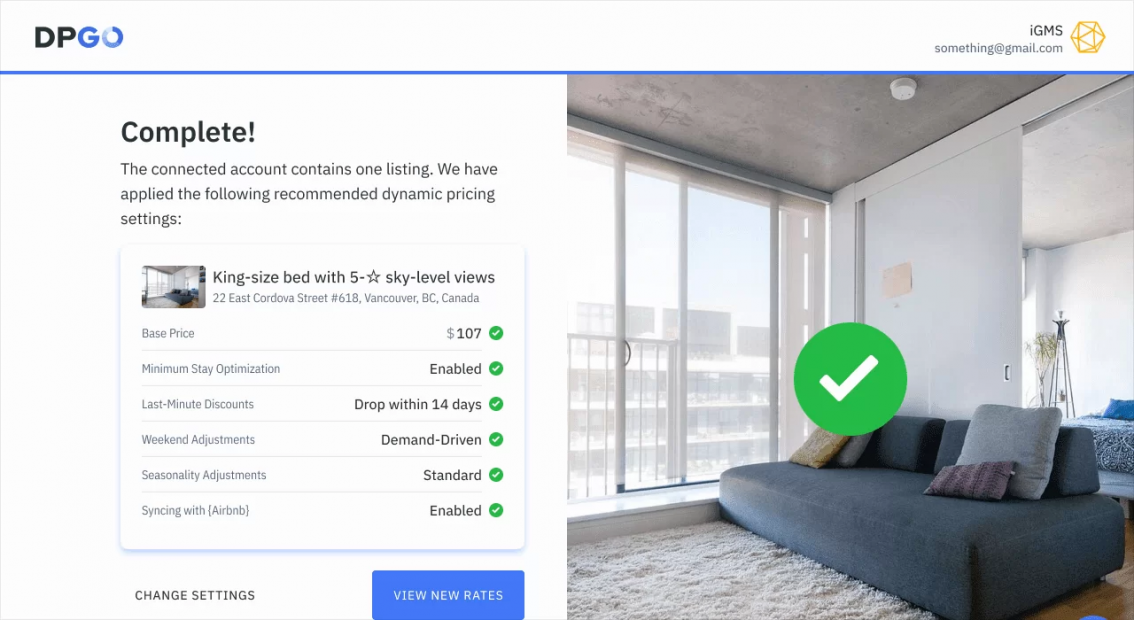
DPGO is an AI-driven software that helps hosts, vacation rental owners, and short-term rental managers use dynamic pricing. By analyzing over 200 market data parameters, it can increase your occupancy rates for a single listing or an entire portfolio significantly.
It makes it easy to manage price changes and availability rates with data-driven insights and extensive knowledge of your target market. Examples of its popular features include: daily market insights, expanded AI recommendations for your own personal strategy, flexible adjustments for seasonal and weekend price adjustments, and yield management.
iGMS
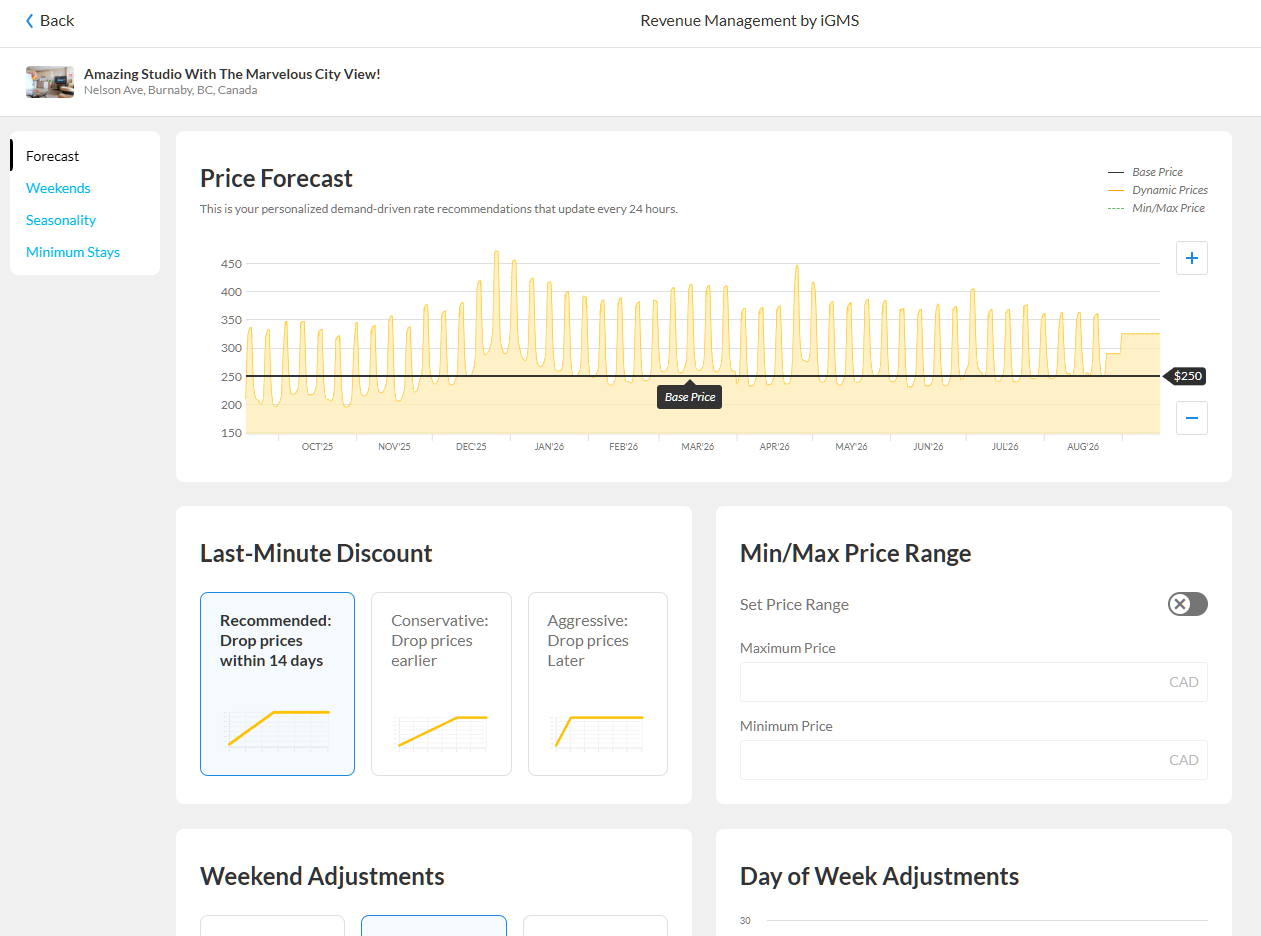
Best known for its calendar management, iGMS has expanded its features to include a built-in price engine, too. It uses demand signals and market analysis to suggest and apply nightly rates.
One of the big benefits of using its revenue management toolkit is the level of control that you enjoy. Before activating any price changes, you can first view the recommendations via the calendar. On top of that, you can also choose if you want to apply your dynamic pricing strategy conservatively or more aggressively.
FAQs
Which market trends can impact Airbnb hosts’ pricing strategy?
There are several market trends that can influence how Airbnb hosts should set prices. These include an increase in nearby listings, a rise in domestic travel, economic conditions, and changing customer expectations.
Why do you need dynamic pricing tools?
Manually tracking and responding to all the variables that can impact your pricing strategy is time-consuming, error-prone, and rarely optimal. Dynamic pricing tools solve this by continuously analyzing market data and automatically adjusting prices in line with market conditions, competitor pricing, and predefined rules. This helps maximize revenue when demand is strong, protect occupancy when demand softens, and remove guesswork from pricing decisions.
What’s value-based pricing?
Value-based pricing is a pricing strategy where hosts set prices according to the perceived value of their rental rather than its cost to maintain. For example, if you offer a prime location, exceptional design, premium amenities, and a superior guest experience, you can use value-based pricing to justify charging more.
[ad_2]
Source link